
Don't let your Profits Run Off
Nutrient runoff can be a costly problem for Indiana farmers, both economically and environmentally. Learn more about testing N on your operation.
Better Water Management Means Better Returns
Every acre-inch of water that leaves your field the wrong way takes profit with it. Whether it's nitrogen washing through your tiles, topsoil moving off-field during heavy rains, or standing water drowning out yield potential, poor water management costs Indiana farmers real money every season. The good news? Most water management problems have practical, proven solutions that pay for themselves—often in the first year. Understanding how water moves nutrients, soil, and yield off your bottom line is the first step to keeping more dollars per acre where they belong.
Nutrient Loss
Water can assist in root uptake of nutrients or carry nutrients right away into ground or surface water pools.
Erosion Damage
Water carries sediment that may be tied to certain nutrients.
Yield Reduction
Not having water when it’s needed or having too much will affect numbers shown on the yield monitor.
9 Ways to Keep Nutrients In Your Field
Keeping nutrients where they belong—in your field—protects your investment and Indiana's waterways. From managing tile drainage to restoring natural buffers, these nine practices help you reduce runoff, improve water quality, and maintain productive soils. Each approach offers a different way to control how water moves through your operation, giving you options that fit your land, your budget, and your long-term goals.
Controlled Drainage
Manage water table levels with adjustable tile outlets to keep nutrients in the root zone longer and reduce downstream losses.
Manage Tile Drainage
Proper tile system design and maintenance ensures efficient field drainage while minimizing nutrient transport to surface waters.
Bioreactors
Install treatment systems along tile lines to filter and reduce nitrate from drainage water before it leaves your farm.
Install Grassed Waterways
Vegetated channels slow runoff, trap sediment, and reduce erosion in areas where water naturally concentrates.
Build Riparian Buffers
Plant strips of trees, shrubs, and grasses along streams to filter runoff and stabilize banks.
Add Blind Inlets
Direct surface water into tile systems through rock-filled pits that capture sediment and reduce gully erosion.
Incorporate Saturated Buffers
Redirect tile drainage through vegetation-filled buffers where plants and soil microbes remove nutrients before water reaches streams.
Restore Wetlands
Re-establish wetland areas to naturally filter nutrients, slow water flow, and provide wildlife habitat.
Create Two-Stage Ditches
Widen drainage ditches with benches that slow flow during high water, allowing sediment and nutrients to settle out.
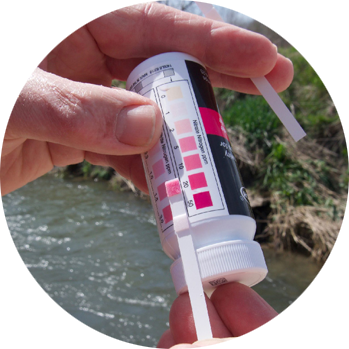
How to Use Nitrate Test Strips
Indiana farmers can get free nitrate test strips from IANA to test ditch, tile, runoff, or creek water around their operation.
What am I Losing Into My Tile Water?
If you use tile water to evaluate your nitrogen loss, you can actually find your loss per acre by using this formula:
Concentration × Tile Flow ÷ Drainage Area = lbs. of N per acre being lost
Your Result:
What do your results mean?
These results are not precise measuring tools, but a resource for estimations. How can you keep more nitrogen where you need it?
Applying nitrogen as close to the time it's needed at adequate rates helps reduce nitrogen loss. Planting foraging / scavenging cover crops helps reclaim excess nitrogen and keep it for the next crop.
Please use this estimation for informational purposes. Reach out to your personal crop advisor for more information and detailed plans of action.
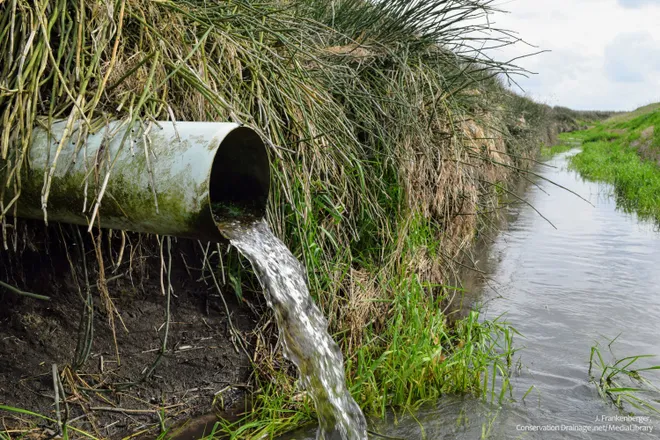

IANA PARTNER SPOTLIGHT:

Indiana’s farm land and natural areas are more than just beautiful to look at; they sustain many habitats and countless species of plants, fish and wildlife.